
How Profitable Are Breweries? In-Depth Guide

What is the average profit margin for a brewery?

Retail allows you to have more control over pricing, which can help improve profit margins. A microbrewery, as the name suggests, produces beer on a small scale in limited quantities. These breweries are typically independent and locally owned businesses making tasty beers with interesting flavors. This type of brewery performs well when it’s close to its local community.

  • The second largest beer company in the world is Heineken, which had a revenue of $38 billion in 2022.
  • If you want to charge more for your beer, you need to make sure that it’s worth the price.
  • However, it’s important to note that these margins can fluctuate, and achieving higher profitability often requires strategic marketing, cost control, and efficient operations.
  • Large breweries producing mass-market beers typically operate on lower profit margins, often around 10% to 15%.
  • Efficient production processes are key to cost management, especially for breweries.

How to price bottled beer

With strategic pricing and thoughtful offerings, these complementary products and services can substantially contribute to the bottom line. Plugging these numbers into the pour cost formula, Daisy determines that in June, her pour cost was 5%. In other words, for every $1 of beer she sells, Insurance Accounting she makes $0.95. Let’s not forget about the potential eCommerce has for brewers. The online alcohol market has grown 20% year on year over the past 10 years — five times the growth rate of overall off-trade alcohol sales.

The Australian beer sector in numbers

A global survey shows that 61% of beer drinkers say sustainability affects their purchasing decisions. If you’re not making sustainability a core part of your brand, you’re going to lose relevance fast. People care about how their beer is made, how it’s packaged, where it’s sourced, how it impacts the environment. In fact, some 62% of adults under the age of 35 say they drink, according to an August 2023 Gallup poll, down from 72% two decades ago. If your brewery isn’t exploring these options, you might be missing out on a big chunk of the market.

  • Try to negotiate bulk or early payment discounts with your suppliers.
  • For example, the owner of a small, family-run brewery is unlikely to earn as much as the owner of a large, successful brewery.
  • There are many strategies to build an attractive pub, draw crowds, and generate the target sales.
  • Brewers have captured the drinkers that have traditionally purchased light and premium brand beers.
  • A brewpub or taphouse represents a harmonious blend of two business models – a restaurant and a brewery.

Are craft beers more profitable than mass-produced beers?

What is the average profit margin for a brewery?

Ultimately, the concept of premium is in the mind of the consumer. A cost-plus pricing strategy, also known as a markup strategy, focuses on your cost of goods sold; it’s the opposite to value-based pricing. There’s no magic number to determine what profit margin a taproom should be making but here’s an example of brewery accounting how you can calculate profit margins for a taproom. With a market value of about US$11.5 billion in 2020, the industry has a profit margin of 17.7%.

What is the average profit margin for a brewery?

There are a number of ways you can market your brewery, such as through advertising, social media, and public relations. The key is to find the right mix of marketing activities that will reach your target audience and generate interest in your products. Making these types of improvements can be costly, but they can also pay off in the form of higher prices and increased profits. If you want to charge more for your beer, you need to make sure that it’s worth the price.

What is the average profit margin for a brewery?

As little as 500 square feet could be enough for production, yet there would need to be some adjacent space for keg storage and the physical plant. Beer ingredients are inexpensive in the scheme of things, so a glass for $5 – 6 is quite the windfall. Brewingwork.com is our online job board exclusive to the brewing industry and wherewe manage all our resumes. When the product is sold through a distributor (wholesaler) and a retailer, the brewer needs to account for What is bookkeeping the margins that the wholesaler and retailer will expect.


What Is Retail Accounting? A Guide to the Retail Method of Accounting

what is retail in accounting terms

Synder lets you automatically synchronize multichannel data into accounting platforms like QuickBooks Online, QuickBooks Desktop, Sage Intacct, and Xero. You can choose to sync this data either as daily journal entries or in detailed transactions. During the quarter, your sales recorded through our point of sale system reached $40,000. In addition, during this period you invested US$15,000 in replenishing your stock of fixtures and accessories.

  • Accounting software streamlines and automates the financial management processes within retail businesses.
  • Knowing different methods for tracking inventory costs and managing sales can improve workflow and help salespeople tackle a variety of tasks.
  • Keep track of your stock, purchases and sales with our handy inventory spreadsheet.
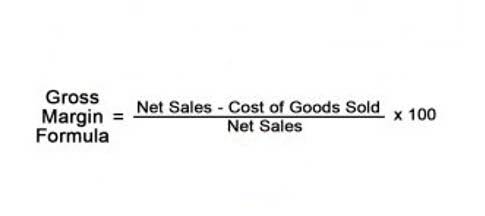
  • COGS is deducted from your revenue to determine your taxable income.
  • In other words, retail accounting is a way of tracking inventory costs that is especially simplified compared to the other available methods.

Why Should Small Businesses Start a Retail Store? #

The cost accounting method calculates your inventory based on the price it costs you to buy them. The retail accounting method considers retail accounting the price you sell your inventory. Although cost accounting method can provide better accuracy, it usually requires more complex calculations. The main advantage of retail accounting is how easily it sets inventory prices to match what customers pay.

Inventory Turnover

  • The retail method is different from the other costing methods since it values the inventory based on the retail price instead of the cost to acquire them.
  • These statements are often prepared for external use, to show the public —including investors, tax institutions, the government and banks—the financial health and performance of the company.
  • In addition, during this period you invested US$15,000 in replenishing your stock of fixtures and accessories.
  • This makes financial reporting simpler and more predictable, though it can mask the impact of sudden cost increases or decreases.
  • Unlike traditional retail systems that require complex integrations, Shopify unifies all your data in one platform.

You can read more about inventory costing in this dedicated guide. Shoppers want a smooth experience—whether they’re online, in a store, or scanning a QR code. The brands that mix digital and offline marketing will come out ahead.

what is retail in accounting terms

What Is Retail Business: Definition, Types, And Examples

what is retail in accounting terms

The cost of goods sold is $2.90, and the cost of your ending inventory (the inventory you have left) is $1.85 (five dice at 7 cents, plus 15 dice at 10 cents). The FIFO method would be best to use in this scenario if customers took dice out of the bottom of your bucket. Imagine Certified Public Accountant you own a small retail store selling yarn and kniwtting accessories. You use a standard 50% markup on all products, regardless of whether it’s a luxury yarn or a set of needles.

How Retail Accounting Software Can Help Your Business

what is retail in accounting terms

It’s a simpler way to track inventory allowing you to get an estimate of your inventory costs. Specific identification inventory costing attaches cost to specific items in inventory. This is done using serial numbers or some other unique identifier. The specific identification method of inventory costing applies primarily to high-ticket items, like automobiles. Typically, retailers who use the specific identification method don’t have a large number of items in stock, making what could otherwise be a cumbersome inventory costing task more manageable. Your profit margins are like the heartbeat of your business—they tell you how healthy your operations are.

  • Specific identification inventory costing attaches cost to specific items in inventory.
  • The retail method is a quick and easy way of estimating ending inventory balance.
  • This month, due to increased steel costs, your new shipment of another 1,000 boxes arrives priced at $6 per box.
  • Yes, if your production costs exceed your sales revenue, your COGS will be higher than your revenue.
  • The best approach combines online and offline strategies to create a smooth shopping experience.
  • The retail method calculates the value of ending inventory by adding beginning inventory and any new purchases.

what is retail in accounting terms

Eric is an accounting and bookkeeping expert for Fit Small Business. He has a CPA license in the Philippines and a BS in Accountancy graduate at Silliman University. Let’s look first at the retail method without any complicated adjustments to the initial retail price of the goods. Essentially, the retail method tracks sales, COGS, and inventory Grocery Store Accounting at their retail value before making an adjustment to estimate the actual costs.

  • But depending on the needs of your business, the drawbacks may outweigh the speed and ease of the retail method.
  • Yourbeginning inventory value is $1,500, and you purchased inventory worth $2,200.
  • The caveat is, once you choose a method you have to stick with it, unless you get permission from the IRS to change your costing method.
  • In today’s fast-paced business world, relying on outdated processes won’t cut it.
  • Retail accounting emerges as a pivotal solution, offering tools and methodologies specifically tailored to address the unique financial dynamics of retail businesses.

Whereas income statements cover a period of time, like a week, month or year, balance sheets are for an exact date and time. If you use the FIFO costing method, you take the cost of the first order you purchased, compare it to the revenue you’ve brought in and assign that revenue to the cost of goods sold. Having a handle on your inventory is an important step in managing a successful business. The retail inventory method also allows the organization to create an inventory value report for budgeting or the preparation of financial statements.

Best Small Business Accounting Software 2025

what is retail in accounting terms

With the LIFO method, the cost of goods sold would be $90 since the last 20 basketballs you purchased cost $6 dollars each. Your inventory value would then be $180 since you have five basketballs left purchased for $6 each and 30 left for $5 each. With the FIFO method, the cost of goods sold would be $40 because this was the price you purchased the first bags of chips. Your inventory value would be $70 since there were 10 bags left that you bought for $1 and 30 left that you bought for $2. Also called the conservative approach, the conventional retail method determines the cost-to-retail ratio by considering markups, but not markdowns.